
From Theory to Practice: Sabira Arefin's Approach to AI in Healthcare
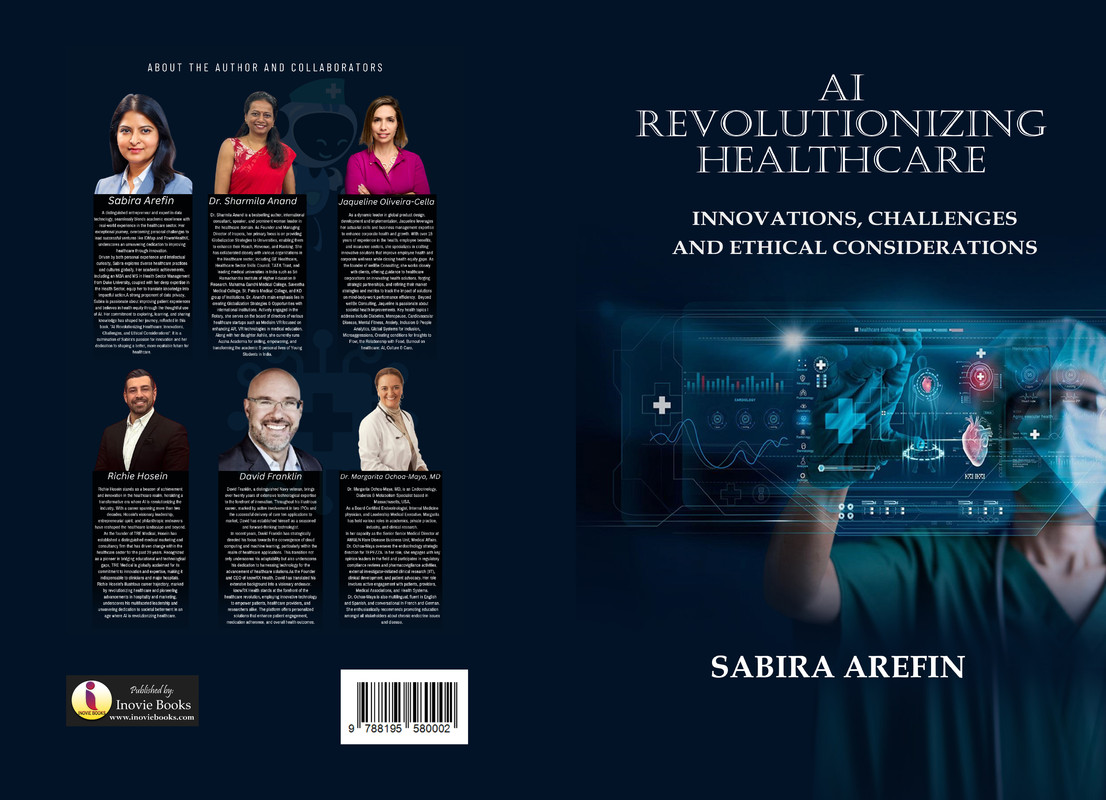
Artificial Intelligence (AI) has emerged as a powerful force driving transformative changes across various industries, and perhaps nowhere is its impact more profound and promising than in healthcare. From revolutionizing diagnostic processes to enabling personalized treatment plans, AI is reshaping the landscape of medical practice, offering unprecedented opportunities to enhance patient care, optimize workflows, and improve outcomes. However, with these advancements come a host of challenges and ethical considerations that demand careful navigation and thoughtful deliberation. In "The AI Revolutionizing Healthcare," authored by Sabira Arefin, the dynamic interplay between AI technology and healthcare is explored in depth, providing valuable insights for stakeholders across the spectrum, from healthcare professionals and policymakers to technology enthusiasts and concerned citizens.
Unveiling the Promise of AI in Healthcare
The book opens with a captivating exploration of the myriad ways in which AI is revolutionizing healthcare. Through pioneering diagnostic tools such as image recognition algorithms and natural language processing techniques, AI is streamlining the process of disease detection and diagnosis, enabling clinicians to identify patterns and anomalies with unprecedented speed and accuracy. Furthermore, AI-powered predictive analytics models are transforming risk assessment and prognosis, empowering healthcare providers to anticipate and preempt adverse outcomes, thereby facilitating proactive interventions and personalized treatment strategies tailored to individual patient needs.
Moreover, AI is catalyzing innovations in drug discovery and development, leveraging vast datasets and sophisticated algorithms to expedite the identification of novel therapeutic targets and optimize drug design processes. By harnessing the power of machine learning and data analytics, researchers can uncover hidden correlations, predict drug efficacy, and even simulate clinical trials, thereby accelerating the pace of medical breakthroughs and bringing life-saving treatments to market more rapidly.
Navigating the Challenges of AI Implementation
Despite its transformative potential, the integration of AI into healthcare is not without its challenges. Sabira Arefin deftly navigates these complexities, shedding light on the technical, regulatory, and ethical hurdles that must be overcome to realize the full benefits of AI in medical practice. One significant challenge lies in the interoperability of healthcare data systems, as disparate data sources and incompatible formats hinder the seamless exchange and integration of information essential for AI-driven insights and decision-making. Moreover, concerns surrounding data privacy, security, and patient consent loom large, raising critical questions about the ethical use of sensitive health information and the potential risks of algorithmic bias and discrimination.
Furthermore, the rapid pace of technological innovation often outstrips the ability of regulatory frameworks to keep pace, creating uncertainty and ambiguity around issues such as liability, accountability, and quality assurance in AI-enabled healthcare systems. Sabira Arefin advocates for proactive collaboration between policymakers, industry stakeholders, and the broader healthcare community to develop robust governance frameworks and standards that promote transparency, accountability, and ethical oversight while fostering innovation and patient-centric care.
Ethical Considerations in the Age of AI
Central to the discourse on AI in healthcare are profound ethical considerations that demand careful reflection and ethical discernment. As AI algorithms become increasingly autonomous and decision-making processes are delegated to machine systems, questions of moral responsibility, agency, and human oversight come to the fore. Sabira Arefin encourages readers to confront these ethical dilemmas head-on, urging a nuanced understanding of the ethical principles that should guide the design, deployment, and regulation of AI technologies in healthcare.
Moreover, issues of equity, access, and social justice loom large, as AI has the potential to exacerbate existing disparities in healthcare delivery and outcomes. Sabira Arefin underscores the importance of designing AI systems that are sensitive to the needs and experiences of diverse patient populations, mitigating the risk of algorithmic bias and ensuring that healthcare innovations benefit all members of society equitably.
Conclusion: Toward a Future of Responsible Innovation
In "The AI Revolutionizing Healthcare," Sabira Arefin offers a compelling vision of a future where AI serves as a powerful ally in the pursuit of better health outcomes and improved quality of life for individuals around the globe. By harnessing the transformative potential of AI while remaining vigilant to the challenges and ethical considerations that accompany its adoption, we can chart a course toward a more equitable, accessible, and patient-centered healthcare system. With her blend of visionary insight, entrepreneurial spirit, and ethical conviction, Sabira Arefin inspires readers to embrace the promise of AI in healthcare while upholding the values of compassion, integrity, and human dignity that lie at the heart of medical practice.
As we stand on the cusp of a new era in healthcare, "The AI Revolutionizing Healthcare" serves as a guiding beacon, illuminating the path forward and empowering stakeholders to navigate the complexities of AI integration with wisdom, foresight, and ethical clarity. In the journey toward a future where technology and humanity converge for the greater good, Sabira Arefin's voice resonates as a beacon of hope and inspiration, reminding us of the transformative potential of AI to revolutionize healthcare and enhance the well-being of individuals and communities worldwide.
